


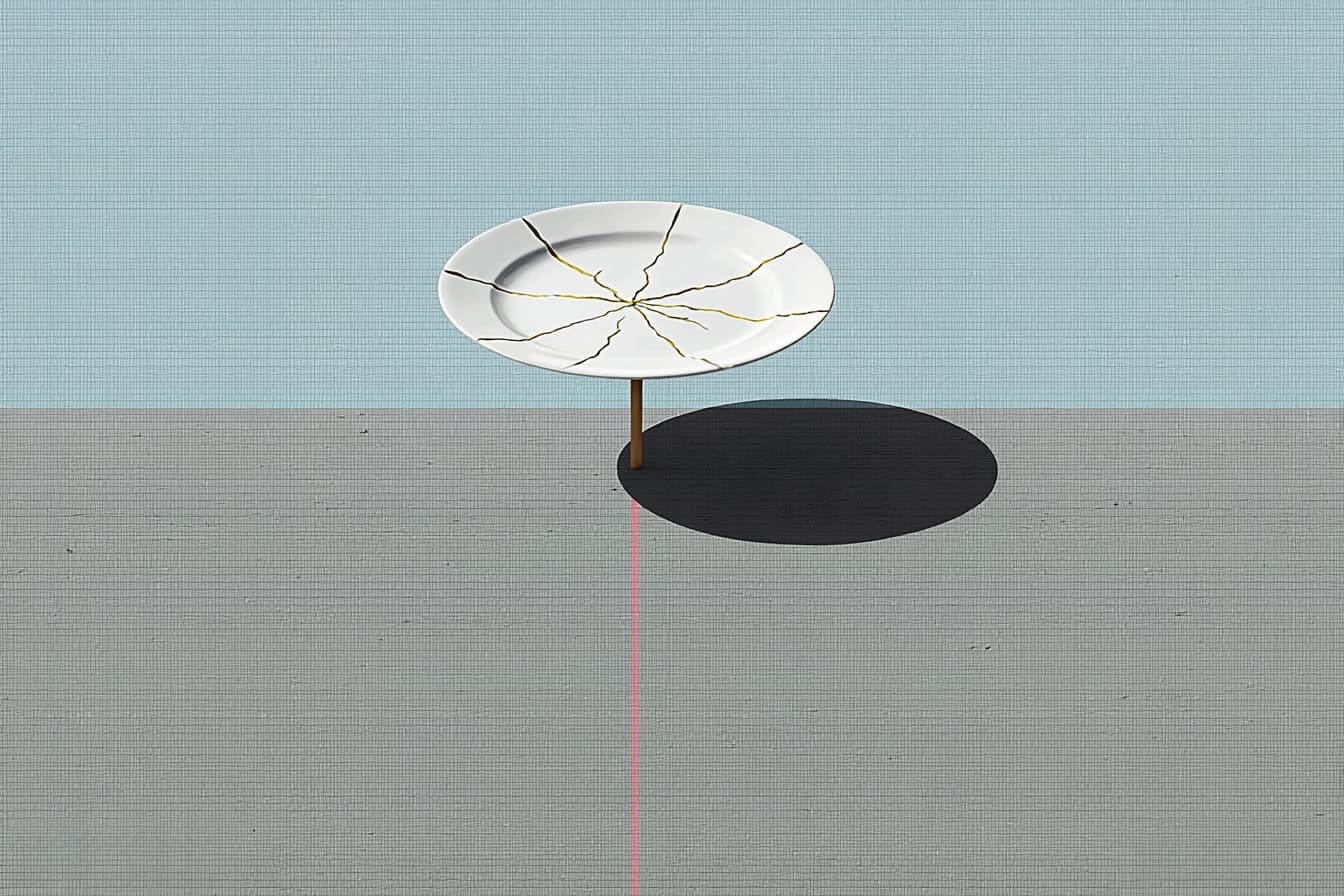
What happens to your work when you truly can’t keep all the plates spinning?
I’m not talking about a head cold. I’m not talking about a mental health day. (Though I think it’s important to take days as needed and don’t feel like you have to power through).
I’m talking about when your body or mind makes a demand in a way that overrides everything else. When work falls to the absolute bottom of your priority list because you have to put yourself first.
Last year, I found out that I had a brain tumor. It was benign, thankfully, but it still required surgery and a long recovery. It wasn’t the type of absence where I could check in occasionally while lying in bed. I had to completely step away from work for almost two months.
For anyone who has faced a serious illness — cancer, autoimmune conditions, surgery, mental health crises, etc. — you know how quickly the ground can shift beneath you. One day, you’re worrying about deadlines, deliverables, and the next meeting with your client/boss. The next, you’re trying to process what your doctor just told you while your mind swirls around the question, “What will happen to me?” The dissonance is staggering.
Once you have your bearings, you realize that you have to deal with more than just the personal impact. You have to figure out what will happen at work.
The illusion of indispensability
We’re conditioned to believe we are indispensable. That if we step away, everything will fall apart. Our value is tied directly to our presence and output.
I’ve taken maternity leave three times throughout my career (plus two extended leaves after pregnancy loss). Set aside the fact that paid maternity leave doesn’t exist in the U.S., but I felt pressure to continue interacting with my employer while on leave. I answered emails and handled a few projects behind the scenes. I worked for a small company and definitely had a “What will they do without me?” mentality.
Stepping away to recover from brain surgery was different because the recovery was non-negotiable. I had to stop, no matter how I felt mentally. Every instinct screamed at me to keep going. To not become a burden or inconvenience to my clients and people around me. Internal pressure is baked into our workplace systems, whether we’re working for an employer or working for ourselves.
On top of that, when you’re facing something serious, colleagues often don’t know how to step in (or don’t realize they should). The work piles up. No one picks up the slack, because there’s no road map for “what comes next” with major medical issues. That feeds into the perception that we’re indispensable.
A study from the University of South Florida identified an implicit or explicit expectation that you show up, no matter what. The study refers to this as “presenteeism pressure.” But pushing through comes at a cost: recovery may take longer. And it also takes a toll on mental health, since you’re putting work ahead of health.
A major medical issue can feel like you’re falling off the edge of the world, with no clear path back. Outside of the need to step away from work, suddenly you’re in a different place from everyone around you. They’re exchanging their time and skills for a paycheck. You’re doing the same, while also trying to survive an intensely difficult time in your life.
Helping others
I wish I could tell you that the solution is systemic change. Countries outside of the U.S. have figured out that paid sick leave should be a mandatory benefit. Step away from work, take care of yourself.
But here, there’s no such security. People drag themselves to work when they’re sick because they’re afraid of losing income (or, worse, their job and health insurance). Or they’re afraid of “letting the team down” or “being a burden to others” because it is so ingrained in our culture of Every Person For Themselves.
I have no illusion that companies will suddenly start treating illness like the human reality it is. Instead, change will come at the person-to-person level in how we take care of each other.
If you work for an employer
Take your sick time. I know that sounds obvious, but so many people don’t. Use whatever you’re allowed to take, without guilt. Paid time off is part of your total compensation package, so not taking sick leave is effectively donating your time to the company, when the company should be paying you not to work.
You may not be able to overhaul a company’s lack of a backup plan, especially for an extended medical leave. But you can request better documentation, cross-training, and coverage plans. These can be the difference between feeling supported and lying awake at night panicking about what’s happening in your absence.
Be the person who steps up when someone else steps away. It doesn’t have to be a grand gesture — that’s for the company to figure out. But you can take something off that person’s plate, or send a message that says, “I’ve got this. Focus on yourself.”
If you’re self-employed
This is admittedly harder, especially if you’re running a solo business. You don’t have a team you can turn to. At best, you can have systems in place so things continue to run smoothly, even when you’re away.
Designate someone who can triage things like incoming inquiries or anything critical that might potentially come up (think of it as a solopreneur buddy system). Automate what you can: invoices, recurring communications, project updates. Document your workflows so that if someone else ever needs to step in, they’re not guessing.
Stepping fully away from my business to recover from surgery was incredibly hard. I wondered if everything would collapse without me there. But I prepared as much as I could and had to hope for the best, because working after brain surgery was simply not an option.
Asking for help
People in our lives often don’t know how to support us. They’ll say, “Let me know how I can help.” I hate this, because it puts the burden on the person who needs help to think of something. But the reality is, in a situation like work, they don’t know what would be helpful to you.
If you’re facing a health crisis, prepare your responses to this question. As soon as you can think clearly, make a list. When someone offers to help, reply, “Actually, if you could do XYZ thing for me, that would be great.” As much as you can, match the ask to the person’s interests or skillset.
We treat health crises like a very individual problem, even though most health crises are completely outside of our control. Bodies break down. Work culture that doesn’t account for this is unsustainable at best and inhumane at worst.
If you go through something in your life, take care of yourself first. It’s ok to lean on other people, even at work (especially at work).
And if you know someone going through a major medical issue, be the person who shows up and offers real support.

If you need to step away from work, this free guide walks you through everything you need to do to prepare.
If you love this newsletter and look forward to reading it every week, please consider forwarding it to a friend or becoming a subscriber. Subscribers get access to additional stories I publish.
Have a work story you’d like to share? Please reach out using this form. I can retell your story while protecting your identity, share a guest post, or conduct an interview.