


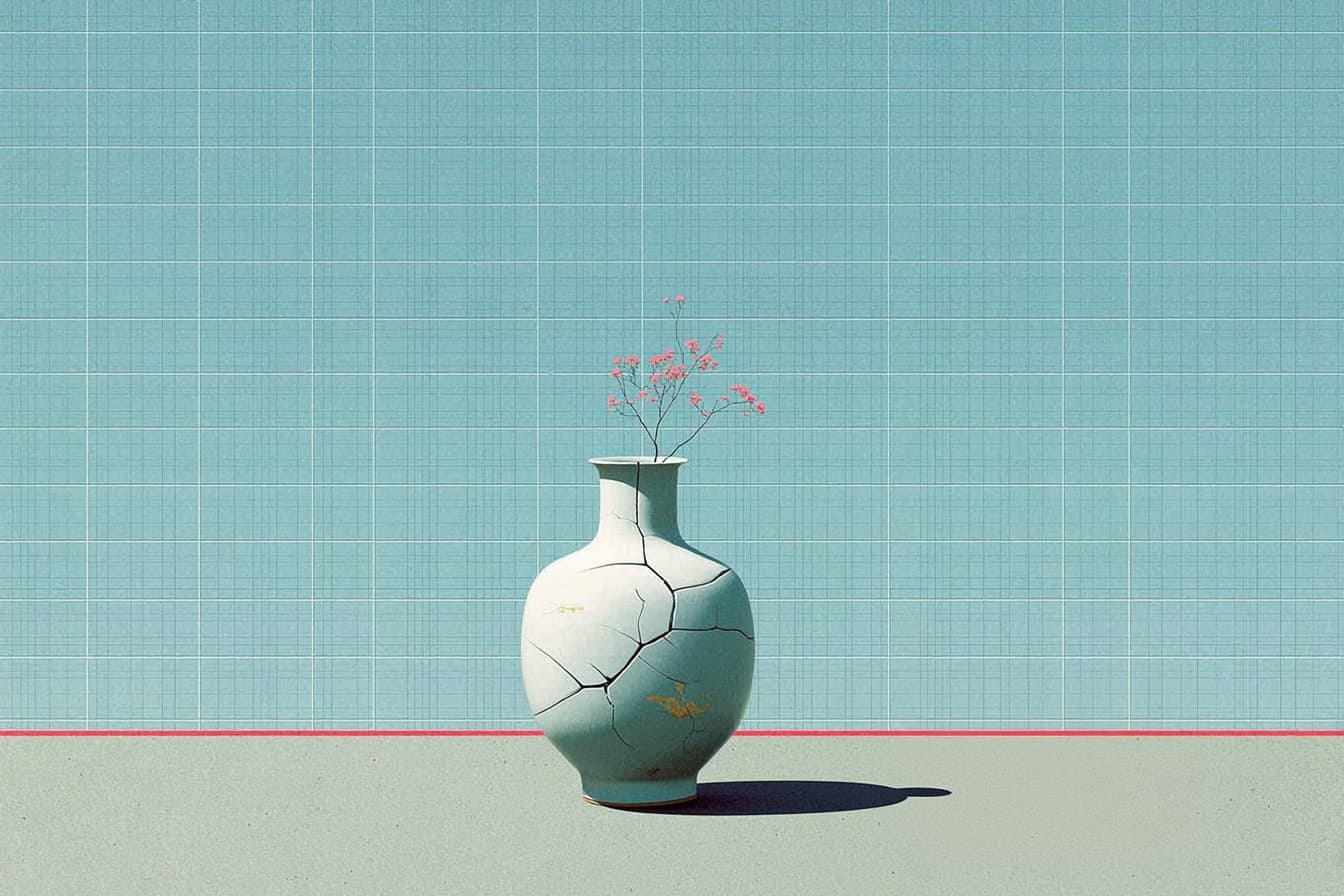
It’s that time of year: the season of reflection, resolutions, Plans™, and Goals™. You might look back on 2025 and think, “Things were stable.” You still have a job. Your team didn’t implode. You limped over the finish line, despite some ups and downs. On paper: a tolerable year.
But here’s the thing about tolerating another year of work: we often think things are stable when we’re really in survival mode. We confuse “not falling apart” with “being okay.”
Survival mode is bad for our nervous systems. It involves constant vigilance, overfunctioning, and emotional detachment. We crank through tasks without thinking about how exhausted we are. It’s the corporate equivalent of white-knuckling the steering wheel during a snowstorm and calling it “good driving.”
Having a job is not stability. At least, not anymore. And because we’ve been collectively conditioned to praise endurance, we rebrand survival mode as “handling pressure well.” The corporate world applauds us for coping. It took leaving the corporate world entirely for me to realize how distorted my view of stability had become.
We’ve been taught to mistake survival mode for stability
Many of us have worked for companies where overwork was the norm. Staying late? I’m committed. Never taking sick time? I’m dependable. Ignoring every sign of burnout? I’m resilient. The more we pushed ourselves beyond our limits, the more praise we received.
In 2009, the company I worked for laid off one-third of its staff. We were all warned that it was coming. But I was the above-and-beyond person, so I felt like my job was safe. I told myself that my performance mattered. That my dedication would protect me. A few years later, the company went through another round of cuts.
In reality, I should have been far more stressed and concerned than I was. I should have seen the signs that the company was floundering and poorly run. But somehow I convinced myself that my job was safe. I finally broke free of the chokehold that job had me in when I quit in 2021. I recognized that my stable job was actually chaos underneath, and I’d been operating in survival mode for a long time.
From the outside, it’s easier to see what happened: layoffs aren’t sudden, warning signs are everywhere, and individual performance is irrelevant to systemic decisions.
Companies thrive on people who make the same mistake I did: employees who think that overwork shields them from layoffs, or who consistently overfunction as a stress-coping mechanism. This is reinforced by the messages that the company is “like family” (right before adding more to your workload). And there is gaslighting (it’s not that bad, everyone’s stressed). And there are shifting expectations (every deliverable and outcome is a moving target).
For many people, survival mode is the baseline. It’s the water we’ve all been treading in, trying not to drown.
The feeling of corporate stability is emotional, not structural. It’s built on praise, reassurance, manager approval, and staying busy. Companies reward your endurance, otherwise known as “operating in survival mode without collapsing.” Promotions go to the people who can tolerate the most nonsense without complaining. Praise is reserved for the “team players” who sacrifice evenings, boundaries, and well-being. Overwork becomes the norm, and if you’re not exhausted, you worry you’re not doing enough.
But no amount of working hard can buy job security. Your fate will always be in the employer’s hands. Structural stability would look like mandatory severance, required notice periods, formal re-skilling programs, and unemployment insurance that isn’t impossible to navigate.
We’ve become excellent at surviving systems that were never designed to provide stability.
True stability doesn’t feel like a threat
Operating in survival mode gives the illusion of stability because it feels predictable. You know the rules (even if they’re terrible). You know what’s expected (do more with less). You know how to earn validation (tolerate hardship, stay quiet, work harder).
Survival mode convinces you that you are the variable. When things feel unstable, you assume you need to try harder, be better, adapt again. From the outside, it’s obvious that corporate instability was never personal. From the inside, survival mode looks like the responsible approach.
Even after leaving corporate work, survival mode lingers. Your nervous system doesn’t immediately trust calm. And the reality is that underlying structural issues remain that make almost any work inherently unstable. You can opt to leave corporate (like I did) and then be faced with the ups and downs of running your own business.
But as we step into a new year, it’s worth questioning whether what feels “stable” is actually just familiar stress wearing a nicer outfit.
A few things to consider as you reflect on 2025 and look toward 2026:
Does “being stable” simply mean “I’m no longer in trouble”?
Do you feel anxious or paranoid when work feels calm?
Has surviving become your entire personality at work?
The truth is: real stability is quiet. Uneventful. Maybe even a little boring. It’s work that doesn’t require hypervigilance. It’s rest that isn’t earned through suffering. It’s the absence of dread. Or, it’s work that you can control: work where you can pivot in a way that helps you and doesn’t harm you.
As you plan for the year ahead, give yourself permission to want more than survival. Survival mode kept you going. But stability — real stability — is where work is something you enjoy or can comfortably keep at arm’s length while you focus on other aspects of your life.

If you want to support my work as a writer, you can buy me a coffee or subscribe to receive additional issues I publish.
Have a work story you’d like to share? Please reach out using this form. I can retell your story while protecting your identity, share a guest post, or conduct an interview.